
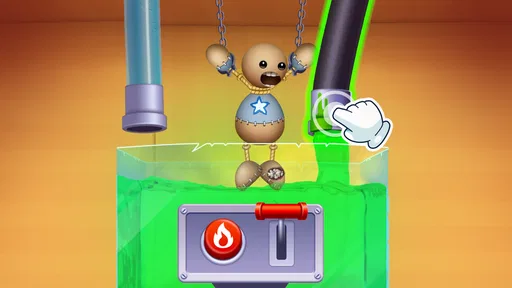
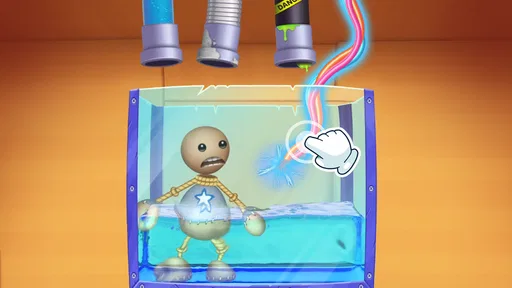
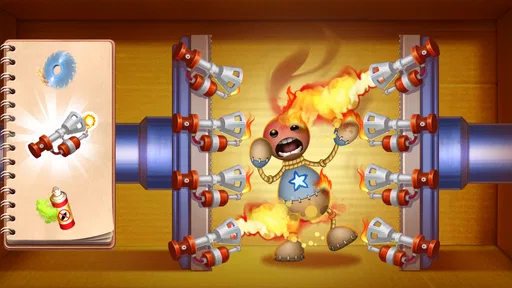
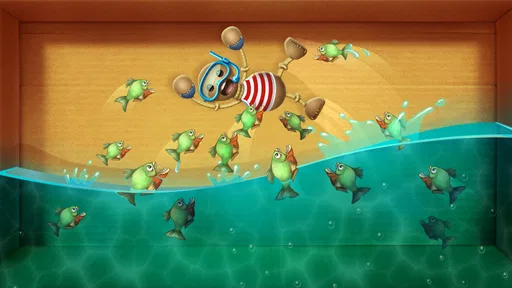

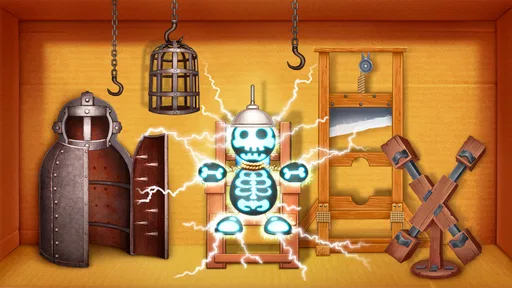
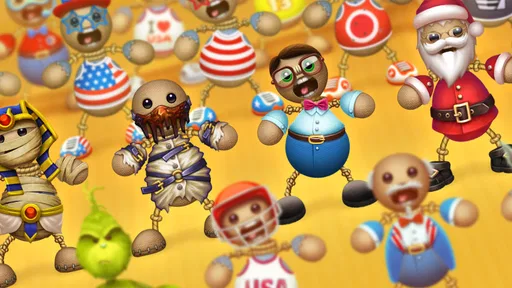
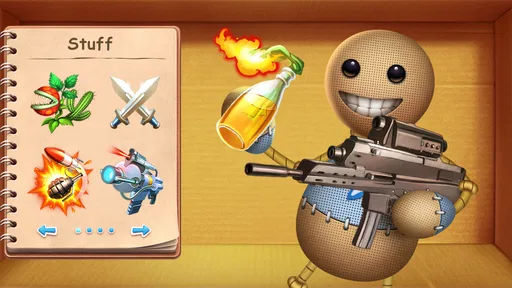
Kick the Buddy-Fun Action Game review
 Analysis by GetAllApps
Kick the Buddy makes a simple promise: give a cartoon dummy a rough time and use the absurdity as a quick pressure valve. My take is that it works best as a brief, silly distraction rather than a game you settle into for long sessions. Its appeal is immediate, its premise needs almost no explanation, and its main weakness is just as clear: if you want tactical action, a story, or meaningful long-term challenge, this is not where I would look first.
Why the simple premise works
This is an action game from Playgendary Limited, built around interacting with a dummy instead of defeating a complex roster of opponents. That difference matters. There is no need to learn a complicated control scheme before doing something entertaining; the fun is in trying an action, seeing the exaggerated reaction, and deciding what to do next. I find that low commitment useful when I have only a spare minute and do not want to remember where I left off in a campaign.
The humor is deliberately broad. The dummy’s role is to be the target of cartoonish mayhem, so the experience feels closer to an interactive stress toy than a conventional action game. That makes it easy to understand, but also means the novelty depends heavily on whether you enjoy the joke. If slapstick makes you laugh, the premise can be a welcome change from games that ask for precise timing or constant concentration. If it feels repetitive or unpleasant to you, there is little else in the basic idea to compensate.
I would describe the core appeal as instant, low-pressure interaction. You can open the game, experiment for a short spell, and leave without feeling that you have abandoned an unfinished mission. That makes it an easy fit for a waiting room, a short break between tasks, or a few minutes on the couch when a deeper game feels like too much effort. It is not a replacement for a proper action game; it serves a different mood.
A playful outlet, not a realistic simulator
It is worth being clear about the tone. The central gag is physical comedy involving a dummy, not a realistic portrayal of conflict. I would not recommend it to someone who dislikes violent slapstick, even when the target is fictional and the presentation is meant to be silly. The Teen age rating is a useful reminder that the humor and action may not suit every younger player or every household. Parents should make that call based on the child and their own comfort with the premise.
That same cartoon framing is part of why the game can feel less demanding than many action titles. You are not being asked to protect a character, follow a narrative, or compete against another person. The dummy is the focus of the joke, and the player’s job is to make the interaction entertaining. For me, that turns the game into a small diversion rather than something emotionally involving. It is a strength when I want something disposable; it is a limitation when I want stakes.
Where it fits among action games
Compared with a platform fighter or a level-based action game, Kick the Buddy has a much lighter structure. Those alternatives usually reward learning enemy patterns, improving timing, or making progress through stages. Here, the immediate interaction is the point. I would choose a conventional action game when I want mastery or a sense of accomplishment, and this one when I want a quick burst of comic chaos without a substantial commitment.
It also differs from a standard puzzle or idle game: its appeal is not primarily planning a solution or letting progress accumulate while I do something else. The entertainment comes from actively playing with the dummy. That makes the experience more engaging than passive screen time for a short break, but it can lose its pull once the basic joke stops feeling fresh. People who need a clear objective to stay interested may find themselves asking what they are working toward.
The friction behind the easy fun
The biggest limitation is repetition. A simple premise is easy to pick up, but it naturally has less room for variation than a game built around distinct stages, opponents, or story chapters. I would treat it as something to dip into rather than a game that must hold my attention every day. If I notice myself repeating the same sort of interaction without getting a new laugh or surprise from it, that is a good point to close it and choose something with more depth.
There is also a practical consideration around in-app purchases. The game is free to download, while optional purchases range from $0.99 to $99.99 per item. That is a broad span, so I would recommend being deliberate before spending: decide whether the free experience is already doing what you want, and use device-level purchase controls if a child might play. The presence of paid items does not make the game unsuitable, but it is a reason not to treat every in-game prompt as part of the basic experience.
Another trade-off is that its quick, chaotic style is not the same thing as a dependable relaxation routine. The game may help redirect attention for a few minutes, but it cannot guarantee that someone will feel calmer afterward. If I am genuinely overwhelmed, I would not rely on an action game as my only way to reset. A quiet activity, a walk, or a game with a gentler pace may suit that moment better. Here, “anti-stress” is best understood as playful distraction, not a promise of a particular emotional result.
Small habits that make it a better fit
One useful way to approach it is to set a short, natural stopping point before opening the game. Because the basic interaction is easy to repeat, it is tempting to keep going without a clear reason. I find a brief break works better if I decide in advance that I am playing until I have had a laugh or filled a few minutes, then put the phone away. That keeps the game in its strongest role: a quick diversion rather than an obligation.
I would also think about the setting before handing it to someone else. The comic violence is central, not a small side element, so the Teen rating deserves more attention than the cheerful, toy-like premise might suggest. For a player who enjoys exaggerated cartoon humor, that tone may be exactly the attraction. For someone sensitive to it, or for a parent looking for a gentle game, a nonviolent puzzle or creative app is a safer match.
Finally, I would judge the game by how it feels after several short visits, not just the first few moments. The initial premise is immediately understandable, but the important question is whether the physical-comedy loop continues to amuse you. If you enjoy inventing little variations for yourself, the interaction may remain entertaining longer. If you prefer the game to introduce new objectives and surprises on its own, its simplicity may wear thin sooner.
Who should give it a try
Kick the Buddy is a sensible pick for players who want uncomplicated, cartoonish action and are happy with a game that works in short bursts. It may suit someone waiting for a bus, taking a quick screen break, or looking for a deliberately silly change of pace after a demanding game. Its scale is part of the appeal: there is no need to reserve an evening or remember a complicated story thread.
I would steer away from it if you want competitive play, a substantial campaign, carefully balanced combat, or a steady stream of new goals. It is also an easy skip for anyone who finds slapstick violence uncomfortable. In those cases, a story-led action game can offer more progression, while a puzzle game can provide a calmer challenge. The right choice depends less on whether this game is “good” in the abstract and more on whether its particular joke is one you enjoy revisiting.
What its audience response suggests
The game has a 4.1 average from around 3.6 million ratings, with about 196,000 written reviews and over 500 million installs. Those figures indicate that the simple concept has reached a very large audience, though popularity does not tell me whether it will suit a particular player. I would read the scale as evidence that the premise is easy to grasp, not as proof that the humor or repetition will work for everyone.
It is free to start, which lowers the barrier for trying the basic idea, but the optional purchases are worth keeping in mind. The game was released on May 22, 2018, and its current version is 2.21.0; it requires Android 7.0 or later. Those details make it easier to judge whether it fits a device and a family’s spending preferences, but the more important decision is still whether cartoon dummy-based action sounds entertaining to you.
My verdict after weighing the trade-offs
I recommend Kick the Buddy to someone who wants a fast, uncomplicated dose of slapstick and understands that the fun comes from the interaction itself, not from a deep progression system. Its strongest quality is how quickly it gets to the point; its chief weakness is that the same simplicity can become repetitive. I would keep it as an occasional time-filler, not expect it to replace a richer action game or a genuinely calming activity.
If the premise makes you smile, the free download gives you a straightforward way to see whether the humor holds your attention. If you want narrative, challenge, or more varied goals, I would choose something else instead. That is the fairest way to approach it: enjoy the game for its brief, cartoonish release, set sensible boundaries around purchases and playtime, and do not ask a deliberately simple diversion to be more than it is.
Pros and cons
Pros
- Simple tap and swipe controls make the game easy to pick up.
- A wide range of weapons keeps the action varied.
- Short play sessions suit casual gaming.
- Destructible environments add visual feedback to attacks.
- The sandbox format lets players experiment without strict objectives.
Cons
- Frequent ads can interrupt play.
- Many weapons and items require in-game currency.
- The repeated attack loop may feel shallow over time.
- Some effects can be intense for younger players.
- Progress can feel slow without spending money.


